
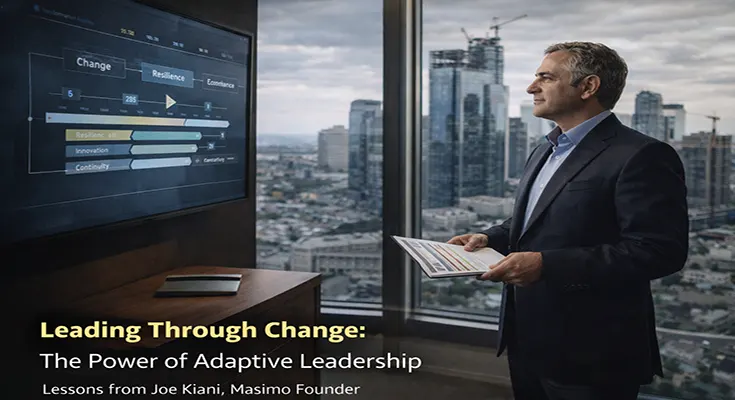
Uncertainty has become a defining feature of modern business. Global markets shift with little warning, innovative technologies disrupt established industries and crises emerge unexpectedly. In this environment, the ability to adapt is no longer optional, but a leadership necessity. Gregory Hold, CEO and founder of Hold Brothers Capital, recognizes that while vision provides direction, adaptability guarantees survival. Leaders who can adjust their strategies and systems as circumstances develop are the ones who sustain momentum in a world of constant change.
Adaptive leadership is not about abandoning plans at the first sign of trouble. It is about creating frameworks flexible enough to bend without breaking, systems resilient enough to change under pressure and cultures confident enough to navigate uncertainty. Leaders who cultivate adaptability prepare their organizations not only to withstand change but to thrive because of it.
Understanding Adaptive Leadership
At its core, adaptive leadership is the capacity to respond to developing conditions while maintaining focus on long-term goals. It combines strategic foresight with agility, enabling leaders to recognize when circumstances demand a pivot and when discipline requires staying the course.
Unlike rigid leadership models, adaptive leadership acknowledges that no strategy is permanent. What worked yesterday may not work tomorrow, and clinging to outdated methods can be as damaging as having no plan at all. Leaders who embrace adaptability build organizations that can change continuously without losing sight of their purpose.
The Role of Systems in Flexibility
Adaptability does not happen by chance. It is supported by systems designed with flexibility in mind. Leaders who want their organizations to thrive in constant change must establish structures that can adjust quickly without causing disruption.
It often means building modular systems that allow for experimentation and adjustment. For example, an adaptable supply chain may rely on multiple partners rather than a single provider, while adaptable workflows may use cross-functional teams that can reconfigure as priorities shift. Systems built with agility in mind enable leaders to change direction without dismantling operations.
Balancing Stability with Agility
One of the most significant challenges for adaptive leaders is balancing stability with agility. Too much focus on stability can create rigidity, while too much emphasis on agility can result in chaos. Successful leaders understand that both are essential.
Stability provides confidence. Employees need to know that the organization has core values, a clear direction and reliable processes. Agility provides resilience. Teams must be able to adjust those processes and strategies when conditions demand it. Adaptive leadership lives at the intersection of these two forces, blending the steady with the flexible to create organizations that are both reliable and dynamic.
The Human Side of Adaptability
Adaptability is not only about systems, but also about people. Leaders must cultivate cultures where adaptability is valued and practiced daily. It means encouraging curiosity, rewarding experimentation and accepting that failure is often part of progress.
Employees who feel empowered to adapt are more likely to take the initiative when circumstances change. Leaders who communicate openly about uncertainty and invite input build trust, which in turn strengthens resilience. In adaptive organizations, people do not wait for instructions, but they act, knowing that their leaders trust their judgment.
Learning as a Leadership Discipline
Adaptive leaders view learning not as a one-time activity but as a continuous discipline. They scan for signals of change, seek out new perspectives and reflect on both successes and failures. This commitment to learning enables them to anticipate challenges and respond more effectively when they arise.
Organizations mirror their leaders. When leaders model curiosity and humility, teams follow suit. By embedding learning into culture through training, reflection and open dialogue, leaders enable their organizations to remain alert, agile and ready for what comes next.
Adaptability in Action
The need for adaptability becomes most visible during times of crisis or rapid transformation. Markets may contract unexpectedly, competitors may introduce disruptive innovations, or global events may shift supply and demand overnight.
Gregory Hold of Hold Brothers Capital points out, “Skills can get you through a typical day. But when things get uncertain, the steady, adaptable, committed and loyal people shine.” Adaptive leaders embody this truth by remaining calm under pressure, reframing challenges as opportunities and guiding their teams through uncertainty with clarity and confidence. Their adaptability becomes contagious, inspiring resilience throughout the organization.
Empowering Teams for Change
Adaptive leadership is not a solo endeavor. Leaders must empower teams to adapt alongside them. It means decentralizing decision-making, providing access to information and giving employees the authority to act within clear guardrails.
When teams are empowered, they can respond to challenges in real time rather than waiting for top-down direction. This responsiveness enables organizations to stay competitive in fast-moving markets. Empowered teams also feel a stronger sense of ownership, which strengthens engagement and commitment to the vision.
Continuous Feedback as a Tool for Agility
Adaptability requires feedback. Leaders cannot adjust effectively without knowing what is working and what is not. Continuous feedback loops from customers, employees and market signals provide the information necessary for agile decision-making.
Feedback must be acted upon, not just collected. Adaptive leaders create systems for rapid analysis and adjustment, helping turn insights into action. By making feedback part of the organization’s DNA, leaders create a culture that sees change not as disruption but as data to be used in pursuit of progress.
Leadership That Lasts in Uncertainty
The pace of change shows no sign of slowing. In fact, it is accelerating, making adaptability one of the most valuable leadership qualities of our time. Leaders who cling to rigid strategies risk being left behind, while those who embrace adaptability keep their visions relevant in a shifting world.
Gregory Hold of Hold Brothers Capital highlights that the real power of adaptability lies in combining stability with agility. Organizations that embrace this balance transform volatility into sustained opportunity.
Adaptive leadership is not about predicting the future perfectly, but it is about preparing to succeed no matter what the future brings. In a world of constant change, adaptability is not only a survival skill but the pathway to lasting impact. Leaders who master this discipline prove that agility, anchored by vision, is the true hallmark of enduring success.